
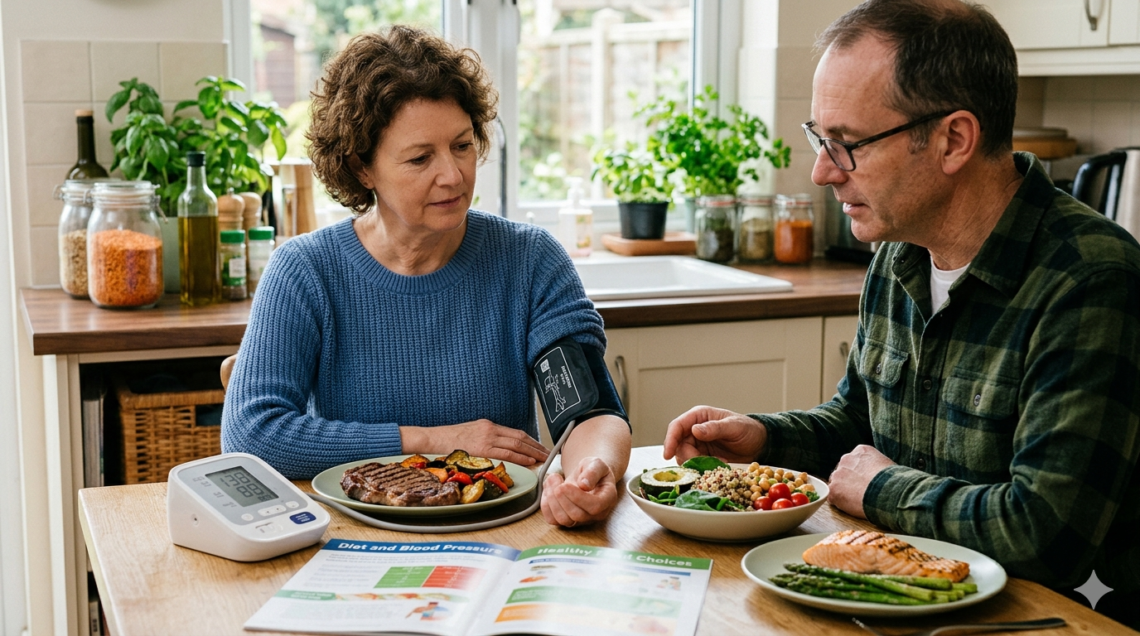
In my last post, I explained how garlic helps cholesterol and blood flow. But I realized something: I was focusing on what to add to my diet. I had not spent enough time thinking about what to reduce.
Red meat was a big part of my diet. Beef curry. Lamb stew. Grilled meat. I assumed it was healthy because it was “natural” and high in protein.
Then I looked at the science. And I learned something that changed how I eat.
If you have ever wondered whether red meat affects your blood pressure — and what to eat instead — this post is for you.
In this post:
- What the science says about red meat and blood pressure
- How red meat raises blood pressure (three mechanisms)
- Processed vs. unprocessed red meat (a critical difference)
- Healthier cooking methods
- What to eat instead (better protein sources)
- A practical weekly meal plan
What the Science Says (The Honest Summary)
Let me give you the direct answer first.
| Type of Red Meat | Effect on Blood Pressure |
|---|---|
| Processed red meat (sausages, bacon, ham, salami) | ✅ Strongly linked to higher blood pressure |
| Unprocessed red meat (fresh beef, lamb, pork) | ⚠️ Weak or no link — but it depends on how you cook it |
A large study of over 44,000 women found that those who ate 5 or more servings of processed red meat per week had a 17% higher risk of developing hypertension compared to those who ate less than one serving per week.
But the same study found no significant association between unprocessed red meat and the risk of hypertension.
So the danger is not “red meat” as a whole. The danger is processed red meat and how you cook it.
How Red Meat Raises Blood Pressure (Three Mechanisms)
Let me explain the science step by step.
Mechanism 1: Sodium (The Biggest Culprit)
Processed red meat is packed with salt. Salt is added to preserve the meat and enhance flavor.
| Food | Sodium Content (per 100g) |
|---|---|
| Fresh beef (unprocessed) | ~60 mg |
| Bacon (processed) | ~1,500 mg |
| Sausage (processed) | ~800-1,200 mg |
| Ham (processed) | ~1,200 mg |
The difference is staggering. Processed red meat contains up to 400% more sodium than fresh meat.
High sodium raises blood pressure by causing your body to retain water. More water in your blood vessels = higher pressure.
Mechanism 2: TMAO (The Gut Bacteria Pathway)
This is a fascinating and relatively new discovery.
| Step | What Happens |
|---|---|
| 1 | You eat red meat (especially red meat, but also eggs and dairy). |
| 2 | Your gut bacteria break down compounds called L-carnitine and choline. |
| 3 | They produce a substance called TMA (trimethylamine). |
| 4 | Your liver converts TMA into TMAO (trimethylamine N-oxide). |
| 5 | TMAO damages your blood vessel lining (endothelium) and reduces nitric oxide production. |
| 6 | Your blood vessels cannot relax properly. |
| 7 | Blood pressure increases. |
TMAO is also linked to a higher risk of heart attacks and strokes. This is why processed and high-fat red meat is particularly harmful.
Mechanism 3: Preservatives (Nitrites and Nitrates)
Processed red meat contains preservatives like nitrites and nitrates. These compounds can:
- Damage blood vessel walls (endothelial dysfunction)
- Increase inflammation
- Raise blood pressure
These additives have a synergistic effect with sodium — together, they are worse than either alone.
Processed vs. Unprocessed Red Meat: A Critical Difference
Let me make this very clear.
| Type | Examples | Effect on BP | Why |
|---|---|---|---|
| Processed | Sausages, bacon, ham, salami, hot dogs, canned meat | High risk | Very high sodium + preservatives + TMAO |
| Unprocessed | Fresh beef, lamb, pork (not cured or smoked) | Low to moderate risk | Low sodium. Risk comes from the cooking method and the fat content. |
What this means for you:
- Avoid processed red meat entirely — sausages, bacon, ham, salami.
- Eat unprocessed red meat sparingly — 1-2 times per week at most.
- Choose lean cuts — sirloin, tenderloin, or round steak.
- Cook it healthily — no charring, no heavy salt.
Healthier Cooking Methods for Red Meat
If you eat red meat, how you cook it matters as much as what you eat.
| Cooking Method | Effect on BP | Why |
|---|---|---|
| Boiling / Stewing | ✅ Best | Fat and sodium leach into the water. Discard the water. |
| Steaming | ✅ Best | No added fat. Retains nutrients. |
| Grilling | ✅ Good | Fat drips away. Do not char or burn. |
| Stir-frying (minimal oil) | ✅ Good | Quick cooking. Use healthy oil (olive or avocado). |
| Pan-frying in butter/lard | ❌ Avoid | Adds saturated fat. |
| Deep frying | ❌ Avoid | Adds unhealthy fats. |
| Charring/burning | ❌ Avoid | Creates harmful compounds (HCAs, PAHs) that damage blood vessels. |
What to Eat Instead (Better Protein Sources)
If you want to reduce red meat, here are your best alternatives.
| Protein Source | Why It Is Better | How to Eat It |
|---|---|---|
| Fish (oily fish) | Omega-3s lower triglycerides and inflammation. | Salmon, mackerel, sardines. Steam, grill, or bake. |
| Chicken (skinless, breast) | Low in saturated fat. High in protein. | Grill, steam, or stir-fry. |
| Turkey (skinless, breast) | Similar to chicken. | Use in stir-fries or soups. |
| Tofu / Tempeh | Plant-based. Contains isoflavones that improve blood vessel function. | Stir-fry, grill, or add to soups. |
| Legumes (lentils, chickpeas, beans) | High in fiber and potassium — help lower BP. | Add to curries, soups, or salads. |
| Eggs | Excellent protein. Low in sodium. | Boil, poach, or scramble (minimal oil). |
| Nuts and seeds | Rich in healthy fats, magnesium, and potassium. | Eat as snacks or add to salads. |
A Practical Weekly Plan (No Processed Meat)
| Day | Lunch | Dinner |
|---|---|---|
| Monday | Grilled chicken breast + brown rice + broccoli | Salmon (steamed) + quinoa + spinach |
| Tuesday | Tofu stir-fry + brown rice | Lentil soup + whole wheat bread |
| Wednesday | Steamed fish (tilapia) + rice + leafy greens | Chicken stew (no salt) + vegetables |
| Thursday | Chickpea curry + brown rice | Steamed chicken breast + roasted veggies |
| Friday | Egg fried rice (minimal oil) + vegetables | Grilled fish + sautéed greens |
| Saturday | Tofu + vegetable soup + rice | Turkey stir-fry + broccoli |
| Sunday | Lentil stew (dal) + brown rice | Baked fish + steamed beans |
I follow a similar pattern now. It took me a few weeks to adjust, but now I prefer it. My blood pressure thanks me.
Key Takeaways
- Processed red meat (sausages, bacon, ham) is strongly linked to high blood pressure.
- Unprocessed red meat (fresh beef, lamb) is less harmful, but still eat it sparingly.
- The main culprits are sodium, TMAO (from gut bacteria), and preservatives.
- Cook red meat by boiling, steaming, or grilling — avoid charring and deep-frying.
- Replace red meat with fish, chicken, tofu, legumes, and eggs.
- You do not need to give up meat entirely. Just reduce it and choose wisely.
Final Verdict: Should You Eat Red Meat?
| Question | Answer |
|---|---|
| Does red meat raise blood pressure? | Yes — especially processed red meat. |
| Is unprocessed red meat safe? | In moderation — 1-2 times per week, cooked healthily. |
| Should you avoid processed red meat? | Yes — sausages, bacon, ham, salami. |
| What should you eat instead? | Fish, chicken, tofu, legumes, eggs. |
| Is red meat completely off-limits? | No — but treat it as a treat, not a daily staple. |
I now eat red meat once a week at most. I avoid processed meat entirely. My blood pressure has never been better.
That is the truth. No hype. Just science.
Did this post help you? I am not a doctor. I am just a man who decided to stop guessing and start learning. If you want to understand more about how food actually affects your body, follow this blog. I write what I learn — one lesson at a time.
Next up: Why do men get hard at night? The science of NPT (nighttime erections) and what it reveals about your health.

